|
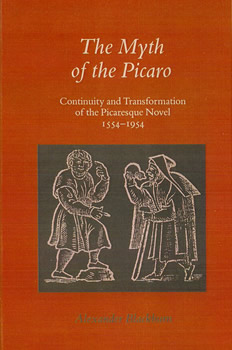
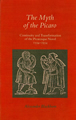
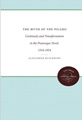
THE MYTH OF THE PICARO: CONTINUITY AND TRANSFORMATION OF THE
Comments Blackburn’s The Myth of the Picaro stands as a brave and innovative critical work… In the final analysis, he claims, the picaresque novels offer ‘sustained inquiry into civilization and its discontents,’ an inquiry which has gone ‘all the way to chaos and back’. This is where The Myth of the Picaro seems strongest. It warns of the abyss and encourages us toward that old imperative, ‘Go love’." -- Craig Lesley, Dictionary of Literary Biography Yearbook 1985 "Mr. Blackburn has done for the picaresque something analogous to what Empson did for the pastoral: after extracting the myth from the form, they both discover that myth is in some unlikely books. Mr. Blackburn’s book bids fair to acquire something of the same enduring fame as Empson’s Varieties of Pastoral." -- Reader’s Report. UNC Press "One gets a convincing overview of the development of the genre: the modern novel which originated with Lazarilllo de Tormes arises out of the tension between works of loneliness and disintegration of order on one side, and works of love and communication on the other…. What could only be outlined here is a bold and individualistic attempt to give a total concept to the picaresque genre with its individual works from the most diversified national literatures. With this work, Blackburn has shown new avenues to all further research in this subject." -- Gerhert Hoffmeister, German Quarterly "Professor Blackburn’s book states as a matter of fact that the modern novel originates in sixteenth-century Spain and that its earliest form is the picaresque….He shows how the picaresque novel, while gradually blurring its original ‘technical’ features as a genre, gains in its subsequent evolution a thematic richness and a structural and symbolic complexity unknown to the early Spanish examples." -- Juan López-Morrillas, Novelist I consider The Myth of the Picaro one of the very best picaresque studies and one of the few comparative studies which projects an understanding of the Spanish novels." -- Edward Friedman, Book Review Editor, Hispania This is a wise and erudite book, a work of importance for students of the novel, however far their interests may lie from the picaresque." -- Andrew Wright, The South Atlantic Quarterly "This is an elegant, learned, and sad book. It masterfully recounts the rise of the picaro from the ruins of medieval Spanish culture to his ascendancy as the quintessential modern literary type." -- Ralph C. Wood, Religious Studies Review |