
|
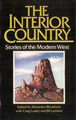
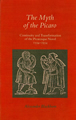
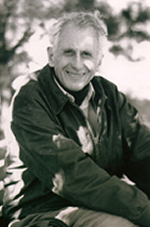
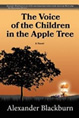
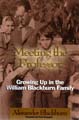
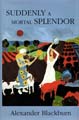
Alexander Lambert Blackburn was born in Durham, N. C., where his father was a teacher of writers at Duke University. Thus as a boy he was shaped by an environment of imaginative writers, including such future luminaries as William Styron, Mac Hyman, and Reynolds Price. Inspired by his father, Alex Blackburn carried a passion for writing across his academic training at Andover, Yale, UNC Chapel Hill, and Cambridge University ( Ph. D. in English). After graduation from Yale he volunteered as an enlisted man in the U.S. Army during the Korean War and was dutifully radiated at an atomic bomb test. After stints teaching creative writing at the University of Pennsylvania and world classics at the University of Maryland’s European Division, he pioneered in the teaching of those subjects at the University of Colorado at Colorado Springs, where he also founded and edited Writers’ Forum, a literary journal devoted to discovering and publishing new writers from the West. Blackburn has published four novels, a collection of essays, a study of the origins of modern ficition in the picaresque novel in Spain, France, England, Germany and America, a major critical study of southwestern novelist-philosopher Frank Waters (seven times nominated for the Nobel Prize in Literature), and an autobiographical / biographical memoir, to be followed soon by The Fire Witihin: A Literary Vocation in which he explores the nature of creative imagination. He has also published two ground- breaking anthologies of fiction writers, most of whom were/are from the West. Blackburn is a graduate from Phillips Academy, Andover, cum laude in English; from Yale University, B.A. (1951), High Pass in English; from the University of North Carolina at Chapel Hill, M.A. (1956), in English, thesis on Henry James and Gustave Flaubert; and from the University of Cambridge, England, Ph.D. in English (1963), dissertation on the picaresque novel, David Daiches and Raymond Williams, supervisors. Blackburn’s studies in creative writing under John Maloney, a James Joyce devotee at the New School in New York, led to publication in the American Vanguard and admission (which he had to decline) to Hiram Haydn’s exclusive novel-writing workshop. When Blackburn was living in England in 1965-73 in order to write The Cold War of Kitty Pentecost, he worked closely with his friend John Wain, novelist, poet, Shakesperean critic and Oxford Professor of Poetry. Blackburn taught Honors English and creative writing at the University of Pennsylvania, 1963-65; was lecturer in English, Shakespeare to the modern age, University of Maryland, European Division, 1967-73, and sometime Tutor in American Literature, Oxford Polytechnic University and St. Clare’s Hall, Oxford University, 1969-73; and taught Great Books (Homer to Dostoyevsky) as Professor of English/Creative Writing at the University of Colorado at Colorado Springs from 1973 until his retirement in 1995. Blackburn lives in Colorado Springs with his wife since 1975, Dr. Inés Dölz- Blackburn, Chilean- born author and professor of Spanish Language and Literature. Their children by previous marriages are Kathy Butcher, a Doctor of Nursing and Nurse Practioner, David B., guitarist, sound engineer, and educator in popular music, and Philip B., Director of Artist Services and of Innova Recordings, American Composers Forum, author of a prize-winning biography of composer Harry Partch. The most complete biographical information to date is to be found in Blackburn’s memoirs, Meeting the Professor and The Fire Within, and in John Nizalowski, “Embracing the West: An Interview with Alexander Blackburn,” The Bloomsbury Review, July/August 2006. The Alexander Blackburn Collection is deposited with the David M. Rubenstein Book & Manuscript Library, Duke University, Box 90185, Durham, NC 27708-0185. Blackburn as an author or editor has published 31 books and is circulating Literary Titan: The Emergence of Frank Waters, a collection of critical essays by various literary scholars. For his work as educator, novelist, critic and editor, Blackburn in 2005 received the Frank Waters Award for Excellence in Literature. Among previous winners of this prestigious national and international award are: N. Scott Momaday, Barbara Kingsolver, Tony Hillerman, John Nichols, Joanne Greenberg and Ann Zwinger. Suddenly a Mortal Splendor, touted as deserving of a Pulitzer Prize for the Novel in The Dallas Morning News review, was runner-up for the 1996 Colorado Book Award in Fiction. The manuscript of the unpublished novel, The Voice of the Children, has received the International PeaceWriting Prize. Blackburn has also won a faculty book award from the University of Colorado, a first prize from the Academy of American Poets, and the Chancellor’s Award for outstanding service to the University of Colorado at Colorado Springs. Philosophical Aspects From Meeting the Professor: One need not align oneself with catch- all trends such as New Age and Aquarian Conspiracy to perceive the emergence of a world culture. Whereas only a century ago people of the Earth were not commonly aware of themselves as citizens, let alone stewards, of a planet that is a speck of blue dust in the cosmos, they are now. A hundred years ago the separation of mind and matter was considered, except by mystics, as infallible scientific truth, but no longer. As humanity surges higher in the evolutionary journey toward enlightenment, we discover the interconnection of all life from the spurt of a subatomic particle/ wave to the stone, the flower, and the tree, from the individual to society, from society to the planet. It is all one. Further, as we situate ourselves in space and time to the point of recognizing our responsibility in and to the terrestrial future, perhaps even in a cosmic plan, the arrogance of solipsism yields through a free and imaginative outpouring of the spirit over the surface of the globe to a humble and generous compassion. Our primal ancestors separated into small groups and spread thinly over the planet; these groups increased to tribes and nations, to dynasties, to empires, to today’s global corporations. We have seen the destruction of vast areas of the Earth, the fear of annihilation, the growth of a human population into a thronging weight, one not felt during the last 20,000 years, but felt now. Nevertheless slowly, and inexorably, it seems to me, an in-the-same-boat spirit is moving in us and through us to create a stage of consciousness where the future matters more than the present. With a collective imperative for preventing destruction and for bringing children up to identify themselves not with in-groups but with humanity, itself, we could all pass along to generations as yet unborn the legacy that unites freedom and love. American Regions In his work as a novelist, storyteller, literary critic and editor, Blackburn has investigated peoples, cultures, and histories of American regions, North, West and South. His first novel, The Cold War of Kitty Pentecost, to a limited extent influenced by the modern techniques and tragic pastoral mode of Faulknerian tradition, traces through the lives of three generations of black and white families the transition from the Old to the New South. "Faulkner and Continuance of the Southern Renaissance," an essay first presented in 1981 at the Faulkner and Yoknapatawpha Conference, published by the University Press of Mississippi, and reprinted in Creative Spirit, relates an entire generation of post-Faulknerian writers (Styron et al) to a similar theme of historical transition. Meeting the Professor depicts the Blackburn family’s Northern and Southern roots. Even though Blackburn did not take up residence in the West until 1973, it has fired his imagination. Sensing that the West is rich in writers but poor in publishers, he founded Writers’ Forum in 1974 and edited it for 21 years with the assistance of Craig Lesley and Bret Lott in an effort to close that gap, subsequently producing anthologies of western storywriters to demonstrate the authenticity and accents of greatness in their works. Blackburn’s quest for the heart of what he calls “the interior country” led him in 1982 to Frank Waters, the man and his 28-book career. After five years of study and research, he published A Sunrise Brighter Still, so far the only full-length critical evaluation of its kind, and he became more than ever convinced that Waters stands in relation to the civilization of the West as Faulkner did to that of the South. The West, in Blackburn’s view, has been since the 1940s the most vital literary region in the United States, a critical stand explored in his essay "A Western Renaissance," published in Western American Literature and reprinted in Creative Spirit. Blackburn first "discovered" the West during summer vacations from Yale, working as an itinerant laborer in the wheat fields of Oklahoma, Kansas, and Nebraska, then as a waterfront mechanic in Seattle, briefly as a gold miner in British Columbia, then as a forklift operator in a factory in Minnesota. As a low-ranking private in the Army in 1951 he was sent to Nevada as an observer of an atomic test. This latter experience introduced him to a tragic aspect of western and international history and inspired him to write the Pulitzer nominated novel The Voice of the Children in the Apple Tree about the Atomic Age, an investigation almost without parallel in today’s literary scene. Two of Blackburn’s novels are set partially in the West, Suddenly a Mortal Splendor in Colorado and Arizona, Voice of the Children in New Mexico, specifically in Taos and Chaco Canyon before World War I, in Los Alamos, Santa Fe, and Trinity Site, 1943-45. There is a degree of multiculturalism in all of Blackburn’s novels. The Cold War of Kitty Pentecost dramatizes African-American experiences over three generations. In Splendor, the spiritual guide is a Navajo, and Voice of the Children introduces Japanese-Americans as part of the main plot, and the never-before-told story of Japanese- Peruvian internment in Santa Fe is also there. The Door of the Sad People, set in Colorado, 1903-1915, introduces an international cast of immigrants and gives prominence to Hispanic people with roots in the Southwest going back to the seventeenth century. |