If the least of my songs
Avail, no future day will ever take you
Out of the record of remembering Time…
THE AENEID, IX, 633-35,
Translated by Robert Fitzgerald
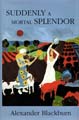
The interwoven themes of this collection are time and the timeless, the fragmentation of
modern life and the redemptive vision of wholeness, dehumanization and the power of love and
freedom. Settings of stories range from the Northeast, especially New York and Connecticut, to
the South, especially the Carolinas, to the West, especially Colorado, New Mexico, and Arizona;
one story is primarily set in the Philippines. Character and points of view vary according to age,
gender, class, ethnicity and occupation: the child, the adolescent, youth, maturity, the very old,
the rich, the poor, Euro-Americans, African-Americans, Native Americans, Japanese Americans,
artists, intellectuals, scientists, teachers, sharecroppers, miners, soldiers, nurses, doctors,
humanists, fundamentalists and mystics. The span of events, focused or implied, is that of the
20th century with references to the 19th; wars and revolutions (Philippines War, WWI, WWII,
Cold War, Vietnam, Hungarian revolution, Chile under Pinochet ) have their impact. The stories
mingle modes of pastoral, romance, comedy, satire, parody and tragedy.
<- back to books page
1. The Golden River
“ A masterpiece” - - May Sarton
A seven-year-old boy’s perception of an old Indian’s tragic life leads to an epiphany of wonder
and filial affection in spite of the impending break-up of his parents’ marriage and the potential
harmful effects of an absurd public school system. The story is set by a river and on a farm close
to a university in an industrial city of the “new South” in the North Carolina piedmont in the
early 1960s. It was originally published in The American Vanguard 1956 (New York:
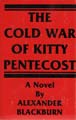
Cambridge Press), then incorporated in The Cold War of Kitty Pentecost (1979). The version
here is revised and expanded.
2. A Little Pain and You Get a Result
“Tough, sweet, and classy”- - Fred Chappell
Mary Branch and her son Manny piece together a story of incest, miscegenation, and false
imprisonment, one covered up by generations of whites. Mary discovers not only that she is the
daughter of an old religious fanatic and missionary, Mrs. Pentecost, and of Mrs. Pentecost’s
father, but also that the whole family has “passed” as “White Negroes”. Raised among African-
Americans in a coastal South Carolina, Mary speaks in a warm vernacular through which is
revealed a strong-hearted acceptance of life. It enables her to triumph over the tragic past and to
persuade Manny to devote himself to “the brotherhood of the puny planet.” Excerpted from
episodes in The Cold War of Kitty Pentecost.
3. The Rich Girl
“It does one of my favorite things - - one of the hardest things - - a heavy message given with a
light hand” - - Joanne Greenberg
This is the first (and longest) story in a series of stories about Trinc DeRoman, who comes from
the aristocracy of wealth, and Aeneas Caldwell, who comes from the aristocracy of intellect.
After they meet in 1916 and make love, each is pledged to the other. Trinc’s grandfather,
however, patriarch of a powerful New England tribe of industrialists, attempts to have Aeneas
castrated. For reasons of conscience, without hope of reunion and marriage, Trinc repudiates the
life of privilege and struggles through the venal and brutal training required of a nurse in New
York in the early 1920s. In the course of exonerating her mother and others from guilt in
malicious wounding, Trinc learns that her grandfather’s syphilis has infected her grandmother,
who, dying, burns down the Homestead which had symbolized family honor since the 17th
century. It is the end of an era - - as Aeneas returns from WWI action and training in quantum
physics and, healed of his wound, proposes marriage.
4. Shoes
Colonel DeRoman, Trinc’s father, a Wall Street lawyer, abandoned her when she was a girl.
Although he has set her up with a trust fund, he has distanced himself emotionally from her.
Then Trinc’s fortune is mostly lost in the Crash of 1929. Moreover, because Aeneas’s secret work
in Los Alamos, 1943-45, has alienated him from his family, Trinc’s marriage comes close to
falling apart. Suddenly Colonel DeRoman, a lonely old egotist and misogynist living at the New
Haven Lawn Club, offers to make Trinc his heir provided that she change her son’s name to his.
With the intention of accepting this bribe at cost to her developing self-esteem, she travels by
train to New Haven. Only then, when confronted by a father whose only son has been killed in
action in the Pacific in 1943, does she realize that what she wants from him, more than the
money she needs, is his acceptance of her as a daughter worthy to fill his “shoes” - - as his equal
and possible superior. After rejecting his bribe, she defeats him in a game of tennis that seems to
spell out her identity achieved in a patriarchal society. Just before he dies of sudden heart attack,
even though he is incapable of expressing love in words, he gives her his boots, those he had
worn in France while impersonating General Pershing in 1917. She loses the inheritance but
proudly wears the boots as she prepares to return to New Mexico and mend her almost broken
marriage.
5. The Beams of Love
“A powerful story” - - Bill Hosokawa
This story moves from North Carolina locales (a piedmont industrial city; a pottery in remote
Moore County) at the time of Pearl Harbor to the desert Southwest, to Los Angeles (smog-free in
1920s), to an internment camp near Mt. Shasta, and ends in 1945 at an artists’ colony in Taos,
New Mexico. Trinc has left Aeneas, not understanding the nature of his secret work on an atomic
bomb. Alone and stressed out, he discovers in himself a strange - - and heretical - - devotion to
the Great Goddess, its erotic expression as romance. Upon encountering Blevyn Skye, a beautiful
young artist of Japanese American descent, he personifies her as this divinity and writes her love
letters he has no real intention of showing to her. When, however, she is arrested as “an enemy
alien” and forced to depart for the West Coast, he gives her the letters in hopes they will help her
to endure humiliations sure to come. Indeed, in L.A., Blevyn is only miraculously saved from a
lynching shortly before deportation to the concentration camp. Even though the romance of
Aeneas and Blevyn is thwarted by these circumstances and others, his letters do in fact
encourage her to survive her ordeal in the concentration camp.
6. The Physicist
“It’s truly a stunning story… To deal with the angst of the scientists who, for one small space of
time, held the fate of the world in their hands, and to extend that anxiety to the questions they
couldn’t answer and were nearly terrified of asking is a stroke of genius” - - Clay Reynolds
Published in War, Literature & the Arts in 2004, this story has three New Mexico locales as
they might have been in 1945 (Los Alamos, Chimayo, Trinity Site) and ends at Cambridge
University in 1947. Aeneas’s mystical, ecological, and ethical sensibilities have come into
conflict with his passionate devotion to a free and enlightened scientific research. Too late he
protests the use of the atomic bomb for expedient purposes against an enemy already beaten and
ready to surrender. He receives a lethal dose of radioactivity at Trinity Site, and a coercive
government official enjoys a temporary success in getting him blacklisted at universities in the
United States. Living in postwar exile in England, he and Trinc hope that “generations yet
unborn” may one day derive benefit from the knowledge that Americans with “conscience”
actually created the atomic bomb.
7. In the Country of the Blind
It is 1904. Tree, a fourteen-year-old schoolboy from Colorado Springs, has been banished from
home and left to fend for himself in the coal-mining region of southern Colorado then and later
in 1914 suffering a violent war of miners striking against the political, economic, and military
might of corporations and the State. After being rescued from a near-death experience by “Kill
Devil” Dare, a veteran of the Philippines War, Tree becomes Kill Devil’s “buddy” in a coalmine
and learns from the older man’s stories of murders, massacres, tortures and imperial lawlessness
that humanity may still sometimes prevail in the worst of circumstances. Based upon true events
in the Philippines, the story here and there implicitly bears an uncanny resemblance to the war in
Iraq a century later, but the primary theme is that of a boy’s love for a spiritual father.
8. The Disappeared
“A brilliant, compassionate piece” - - Pamela Camille, Contributing Editor of Crosscurrents,
which published the first half of this story as “Sentimental Revolution” in 1984; the second half
is excerpted from Suddenly a Mortal Splendor.
The story, told from the point of view of a Hungarian refugee, explores meanings of “disappeared”: desaparecidos in a military coup d’etat; the end of human kind in a nuclear
holocaust; a psychological experience of time. The latter yields to a perception of timeless unity
or the implicate order of wholeness. Paul Szabo escaped Budapest during the revolution of 1956,
married a crippled, sexually abused American girl with sentimentalized Marxist ideals, served in
Vietnam, and returned in the early 1970s to find that Bluejean, his wife, has taken Teapot, his
beloved stepdaughter, to a Latin American country where people are “disappeared.” Paul reveals
his anxieties to his Army buddy, Virgil, a Navajo whose own people are forced to “disappear”
from ancestral lands. Suddenly Paul has a terrifying experience of synchronicity: he “sees” the
execution of Bluejean at the precise moment when it is taking place thousands of miles away.
Virgil guides Paul to realize, one, he must go to the Latin American country to verify the death
and rescue Teapot, and, two, he must look upon the experience of timelessness as a sanctuary of
hope. Although the action of the story seems to come to a stop in 1973, a note written by Paul in
2004 reveals that Teapot “disappeared” before she was set free and returned to the United States
- - and that she, Paul and their families will continue to live under the threat of international
terrorism.
<- back to books page
|